Fiction and Non-fiction Travel and Food Writer

Category: Savoring the Olde Ways (Page 10 of 10)

Medieval Cuisine in Arles, France

Les Cailles à Hydringus et Zinziberine
(Quail with Hydringus root and Fresh ginger)
Carole Bumpus

“We are now ready to fully engage in the serious business of ancient and medieval cuisine,” Madeleine Vedel began. Our Provençal culinary tour group huddled around Madeleine and her chef husband, Erick, as she translated his every move. We were standing in their kitchen, which was purported to have once been a first century, A.D., Roman stable.
“Arles is situated on the Rhône River and is one of the first ports-of-call on the inland ‘highway’ into France from the Mediterranean.” We all nodded our heads vigorously, put down our wine glasses and took up our pens.
“Long before France was named Gaul by the Romans,” she continued in hushed tones, “commerce flowed through our ancient city. You see, food and recipes have always transcended the need for a common language and as mariners stopped at our port, they shared recipes and spices from their homelands. Tonight you will experience some of these ancient recipes.” My heart skipped a beat and I began writing with a frenzy.
“Our first recipe is called ‘Paquets d’Aubergine, or Eggplant Packets; the second is Le Tian Provençal, a mélange of succulent summer vegetables. But the third recipe is most unique. It’s called Les Cailles à’Hydringus et Zinziberine,” she purred, drawing the words out dramatically. We nodded our heads appreciatively, having no earthly idea what she had just said.
“Ah, this is quail with hydringus root and fresh ginger. The recipe uses the medieval method of double-cooking meat and game twice. First, the quail is poached in broth and then, deep-fried in lard. The little birds are then served with a relish, or confiture, first noted by Nostradamus in the 16th century. He lived only a few short miles from us in St. Remy,” she said in an off-hand sort of way. “His sauce is an example of sweet and spicy flavors blended together.”
“Zinziberine,” she continued, “is the medieval word for ginger while Hydringus is the medieval name given to a rare root vegetable known in Provençe as ‘panicaut’. I believe it is from the artichoke family, but Erick chooses to use carrots instead.” We all looked up in surprise as she casually shrugged her shoulders. “The flavors work well and the produce is readily available.” It worked for us.
During the following steamy hours of observation, my imagination took wing. I could envision those boatmen from a millennium ago and the entire seamy, yet savory scene: olive-skinned men wearing filthy blousons and pantaloons with brightly-colored scarves wrapped about dark heads; sweat-soaked faces working over a steaming cauldron while a concertina played and men laughed raucously around a roaring fire. And, I swear I could hear the sound of knives whacking at meats and vegetables, while greasy hands sprinkled exotic spices over the finished product. I was enchanted.
Finally, it was our turn to cook. I chose to work on the Cailles. I began by wrapping my hands around those lovely little quail just to experience what others had done before me. I ignored the titters of laughter and the lively banter around me and concentrated on the task at hand. Swiping at a flopping tendril, I leaned my sweat-soaked face over the simmering broth and dropped in the featherless carcass. Scooping it out of the broth, I dried the drooping creatures, quickly dusted them with corn starch and immersed them into boiling oil. Voilà! I had found my new passion: preparing recipes from ages past.
When our cooking lessons were complete, dinner was served. Succulent aromas of olive-oil laced vegetables filled the air, as cheese-encrusted tians of Aubergine Paquets sizzled in our midst. Then, the pièce de résistance, Les Cailles à l’Hyringus et Zinziberine, was placed in the center of the table. There, staring up at us were fifteen pairs of eyes from the displayed—or splayed—golden-brown bodies of the quail. Some of my cohorts withdrew from the prospect of eating the ‘little birds,’ but I found the quail quite delectable. All were consumed, including the crunchy little heads. And, why not? Where else could we experience delicious and sumptuous recipes shared from hundreds of years ago? Ah, and just a touch more Provençal rosé from the Côte de Rhône, s’il vous plaît.

Tour conducted at the home of: Erick and Madeleine Vedel
of the Association et Cuisine et Tradition
Arles, France
May 1st, 2000 Snap Herplex Hub

A Friday Night in Claviers

Although the sun had dropped behind the 13th century farmhouses of Claviers, a hint of golden sunlight sent its last radiant shafts onto the village square and across the tiny sidewalk café where we sat. The buildings around us held tight to the heat of this June day and St. Sylvestre’s church tower at the end of the square shimmered in the remaining glow. The town square, which was not a square at all, but a tiny triangle, was quiet. The only sounds we heard were from an occasional dry rattle of leaves on the plane trees along the street, a bark or two from a couple of passing but socialable dogs, people conversing quietly at a nearby table, and some accordion music which floated down to us from a tinny radio in an open window. On occasion, a muted cheer or groan also wafted blithely past us from the nightly boules game just around the corner.

Earlier that day, my husband and I had wandered from one village to another driving along the Côte d’Azur—from Antibes to Juan-les-Pins, from Cannes to St. Maxime and on to St. Tropez. We had only a few days remaining of our two-week stay in Provençe and we wanted to squeeze every ounce of cultural essence into the time we had left. And, it was just an hour before, we had left the cacophony and heat behind us as we wove our way up the thirteen hairpin turns along the D55 to the tiny hillside village of Claviers. We had enjoyed the quiet beauty of the hills which seemed even more vivid, drenched in the rich hues of yellow broom and the blue-grey fields of lavender, but my husband and I were hot, thirsty and a tad bit hungry.

So when the sun dropped behind the buildings we, too, dropped into our seats at the café where we could relax and sip a cool glass of pastis. The burly, but cheerful owner of the bar informed us in French, and a bit of broken English, that he and his wife were new to this bistrôt. They had just opened that very week. Food was not available—no, not quite yet—but, the pastis and olives were in great supply.

As we sat back with our drinks, the sunlight suddenly illuminated the faces near us. Patrons quickly shifted sunglasses onto their noses as their heads bobbed to adjust to the flash of light. They, then, settled back to the business at hand. We drowsily dropped our heads toward our glasses as the intoxicatingly, thick smell of licorice drifting into our noses. What the sun had warmed, the pastis cooled.

“Tchin-tchin” we heard, as the murmurings of a toast floated by from a nearby table. We, too, raised our glasses in response. It was Friday night, after all. Voices were raised as others were welcomed into the Square. Metal chairs were scraped across the ancient stones as people made room at the tables. Men embraced men and kissed women; women kissed men and other women, as they sat down to enjoy a communal drink together.

Across the Square, only a few feet away, the last customers from the only grocery store in town came out with their purchases. Once again, the chairs were scraped across the stone floor, as people leaped from their seats. Cheek connected to cheek, and those with heavily-laden hands leaned forward as elbow touched elbow. Young hands reached out to beckon old ones and eyes sparkled as each stopped to exchange pleasantries. Even teen-age boys swaggered through the streets and greeted every one in sight. They placed bisous, or kisses on matronly aunts and jostled younger boys before rounding the corner, off on their own adventures. And once again, a cheer or a groan could be heard from the out-of-sight boules aficionados.

As my husband and I continued sitting in a semi-lethargic stupor, the chimes of St. Sylvestre struck 8 o’clock. I looked up from my drink just as a heavy door slammed shut across the Square. My attention swiveled in that direction as the sharp rasp of a lock sliding into place ricocheted off the nearby buildings. An elderly woman, the owner of the grocery, had just locked and bolted her store for the evening. She turned, cast a wave across the Square, adjusted the knot on her scarf, then trudged toward home.

We stared numbly after the old woman, then back into our glasses. A small bowl of olives slid back and forth between us as we slowly mulled over the French that the bar owner had uttered earlier. “My wife and I have just opened our bistro this very week. No, I’m sorry. There is no food available. No, not quite yet.”

I suddenly sat up in my chair shaking myself awake. Our only hope for food or sustenance had just locked her doors and headed for home. I knew there was no food in the farmhouse we were renting and there were no restaurants open nearby. “We are doomed,” I groaned to my husband. “We will surely starve to death before morning,” I whined.

Suddenly we heard a low rumbling sound—a gnashing of gears—a grinding of metal against metal—a mighty roar of an engine—then around the corner, past the church and into the square lurched a large white van. Pulling up near where we sat, a young man leaped from the driver’s side of the truck, quickly raced around to the opposite door and opened it for a young woman, his wife. As she stepped out of the truck, he reached behind her and lifted out a golden-haired, tousled-headed child and hoisted her high into the air. The year-old baby giggled and the crowd in the Square turned their attention to that joyous sound.

As a door in the back of the truck was opened, the wife with the baby disappeared inside. The young man deftly flung up a panel window, rolled down a canopy sunscreen, hoisted up a counter to the window, and, voila, the Pizza Wagon was open for business.

“Hooray,” I said to my husband. “My whining has been answered.”

But even before the aroma of garlic-infused tomato sauces, simmering local sausages and caramelized-onions could permeate the air around us, the townspeople began to flow out of their homes and down the streets. It was as if the Pied Piper had arrived in town. A line formed near the van as each person in turn leaned forward and up to the counter—some on tiptoes, some on a small step—all to place his or her order. As the young wife bent down to take their pizza requests, she would chat, then stop, and reach for the baby. She carefully lifted her up, and then extended her down over the counter. Nose met tiny nose—old cheek touched new—as each person in line kissed and caressed the child. Time seemed to stop. Nothing at that moment held precedence over the gentle acknowledgement of this cherub.

As if awakening from a dream, I slowly began to look around me. “It feels as if we’ve slipped into the pages of a Marcel Pagnol’s novel,” I whispered. My husband slid upright in his chair, blinked his eyes and looked about him. “You’re right. I fear the pastis, my dear, has gotten the best of us. Maybe you should order some pizza—and I’ll handle the ordering of wine?” His smile was kind, and I knew he was not one to jump easily into a food line. Instead, he signaled the bar owner’s wife to order a bottle of red wine and I stood to steady myself, before gathering my snippets of broken “restaurant French.” As I headed over to join the queue at the Pizza Wagon, I spotted the bar owner’s wife sprint out of the back door of the bar, down the street, and into a house below.

What on earth has my husband ordered? I wondered to myself. He speaks even less French than I do. I stood quietly in line feeling much like an interloper, as the villagers carried on great animated conversations around me. They did acknowledge me. They smiled and nodded their heads. In fact, we exchanged ‘bon soirs’ but I suppose I was grateful that we didn’t strike up a conversation, as I would have been reduced to awkward hand gestures and the shrugging of shoulders. We all knew I was an outsider.

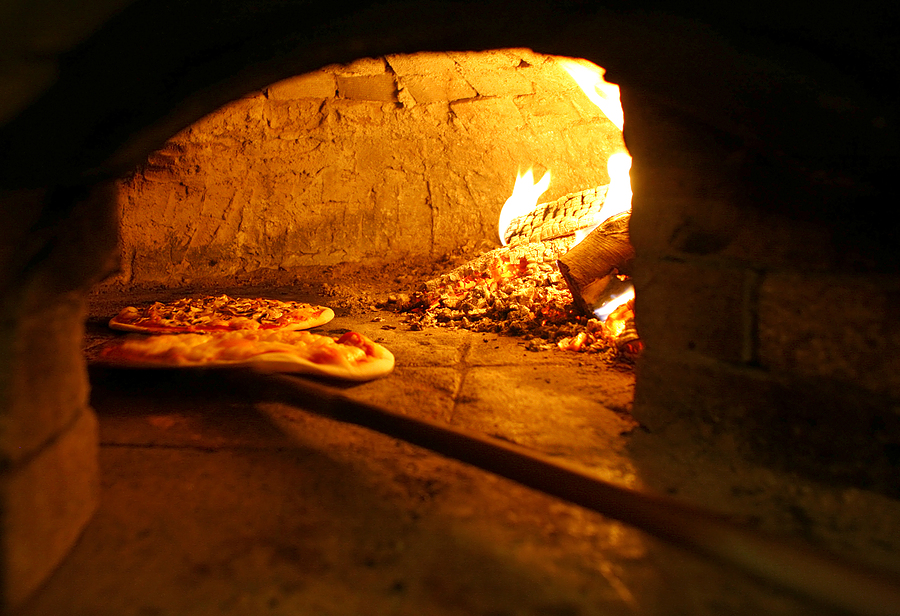
As I stood on tiptoe to place my order, I, too, marveled at the beautiful child of the Pizza Wagon family. She sat precariously on the counter like a tiny princess, while her harried parents whirled about the small mobile kitchen. They pounded out the dough, spun it into the air, and adeptly slid it onto waiting pans while she giggled with glee. Local olive oils, cheeses, sausages, and olives were then sprinkled and layered onto the crust then thrust quickly into the oven.

While awaiting our order, I stood back in line and caught, out of the corner of my eye, the bar owner’s wife trudging back up the steep hill with several bottles of wine tucked under her arms. I hoped they weren’t all for us, but then again, my thirst was returning. She disappeared from view as she scurried into the back of the bistrôt. I continued my vigil. I stood there thinking about her. She was pleasantly plump and wore a dark mini-skirt, one which hiked up about mid-thigh with dark lace hose and stacked heels. Her black sweater, which clung to every ripple on her upper-torso continued down over her waist to join her skirt. But now that I had a moment to think about it, it wasn’t those things that captured my interest. It was the grace and confidence that she carried herself. She exuded beauty. I admired that about her and wished for that singular air of confidence in myself. Someday.

After a bit more time—maybe five or ten minutes of standing on one foot and then another—the local villagers gathered up their boxes of pizza, bid each other ‘adieu’ and returned up the streets again and into their homes. I, too, walked back to our table with the heat of the pizza burning my fingers, and the savory aroma propelling me forward. Beside our table, the bar owner’s wife hovered over my husband as she poured the recently-retrieved wine. He was nodding his head vigorously indicating the good quality of wine she had served. Head nodding was the language he knew best. She turned toward me and smiled sweetly as I approached. I was once again grateful for the language we shared—the smile.

I slipped into my seat, as she poured my glass of wine and then quickly disappeared into the bar. I opened the box, expecting to find a Niçoise-style pizza, but instead found a delicate, thin-crusted pizza, browned to perfection with hot melted cheese pooled magnificently into small crevices where mushrooms and sausages were not. The sauce was flavorful with a light touch of fresh tomatoes, herbs and a subtle touch of olive oil enhanced with piment oiseau—hot red peppers. And peeking out from under the cheese was a layer of jambon or thin ham slices, all of which I didn’t remember ordering. Ah, c’est la vie.

We ate ravenously and swilled down the wine like it was water. And after not too long, we realized we should have ordered more pizza. Perhaps, one or two more. But by the time we realized our mistake, the Pizza Wagon had folded up and ground its way out of the square and on to the next town.

“I guess we’ll have to come back next friday night, my love,” I slurred. My husband smiled, we finished our wine and called it good.

The Pissaladière – One Niçoise Favorite

Pizza Dough:
1 1/3 cups of lukewarm water
1 ½ teaspoons of active dry yeast
1 teaspoon of sugar
Mix together, check for yeast activity then add:
2 tablespoons of extra-virgin olive oil
1 teaspoons of sea salt (fine)
2-3 cups of all-purpose unbleached flour
Knead for ten minutes, and then let rest for one hour covered with a towel.

Topping:
3-4 onions sliced in very thin rounds
1-2 fresh tomatoes sliced in thin rounds
3 garlic cloves, minced finely
10 anchovies in salt, rinsed in water and sliced thin
6 tablespoons of good olive oil
6-10 Niçoise olives or Kalamata olives

In a frying pan, pour in 3 tablespoons of olive oil and sauté onions until golden brown. Put aside. In second frying pan, add last 3 tablespoons of olive oil and simmer the anchovies until they melt into a paste. Add garlic and simmer for less than a minute. Remove from stove.
Preheat oven to 450 degrees F. Roll out dough and place on a pizza pan. Spread the anchovy and garlic paste evenly over the dough. Layer the onions, tomatoes and olives over all. Bake for 15 minutes until crust is browned. Slice and serve with a nice Provençal rosé. Snap Herplex Hub

Soupe de Fraises (Strawberry Soup)

Strawberry SoupMy love of strawberries began the summer of my third year. Sneaking out of the basement apartment of my grandparents’ home, I would head down the darkened garden path, past the lilac bushes, through the back gate and into the warm, morning sun of Mrs. Nelson’s strawberry patch. There, I would swoop down with a vengeance onto the brightest red berries my chubby fingers could wrest free, brush away the dirt and leaves and quickly, quickly before my mother would wail, “Calamity Jane, are you at it again?” I would sink my teeth into one of those sweet, juicy, yet tangy red strawberries. In that moment, I could experience summertime explode in my mouth, ooze down my chin and then? And, then I could get on with the business of being three.

So it was with great joy, that I found myself many years later, the giddy participant of a Provençe cooking tour in Avignon, France at the grand hotel, La Mirande. This elegant seven-hundred-year-old renovated Cardinal’s palace, tucked deftly behind the magnificent yet austere former Palace of the Popes, was built in 1309. And our cooking group would have the distinction of learning to cook on one of their mighty 14th century, wood-fired stoves. Ah, but that was the challenge!

The menu for our lessons of cuisine began with a creamy, yet delicate Artichoke Soup, infused with Spanish ham (only acorn-eating ham, at that). This course was followed by a succulent Red Snapper stuffed with a uniquely-prepared Ratatouille (I’ll have to tell you about that another time) with a Saffron Sauce. But for me, the piece de résistance was a marvelous dessert, Wild Strawberry Soup with Herbs, Spices, Zests and a housemade Lemon-Basil Sorbet. Did I mention strawberries? Wild strawberries?

The instructor of the hour, Daniel Hebet, was a young chef of great sophistication, yet had a humble approach to his cuisine. When asked if he prepared his ratatouille the same way as his mother, he replied with a twinkle in his eye, “I am a good son. I do not contradict my mother.” He developed all of the dishes we prepared but, to me, his masterpiece was his Soupe de Fraises.

Soupe de Fraises
2 pts. Fresh strawberries
½ cup of sugar

Group 1: Fresh Herbs –2 Tablespoons each – finely chopped basil, coriander leaves, tarragon, and lemongrass
Group 2: Spices – ground vanilla, ginger, cinnamon, and cardamom
Group 3: Zests (sweetened) – lemon, grapefruit, ginger, orange and lime zests – (Sweeten with 1 qt. water and 2 cups of sugar)
Lemon juice
Gaseous spring water/mineral water

Blend the strawberries in a blender with ½ cup of sugar. Set aside in the refrigerator. Mix each of the groups separately. When ready to serve, mix a small amount of lemon juice and mineral water into the strawberries. Pour the strawberry mixture into individual bowls with broad rims. Place one scoop of lemon-basil sorbet in the middle of each bowl. Then, sprinkle small portions of each one of the groups consecutively along the outside rim of the bowl.

Now, how do I eat this, you ask? Once you lift your spoon, glide it across one of each of the groups, then into the strawberry soup itself, ending in the cooling sorbet in the center. You will find that every single bite is an extraordinary explosion of flavors not to be found anywhere else—unless, perhaps, it’s in the backyard of your childhood. Snap Herplex Hub

LE TIAN PROVENCAL, Mixed Summer Vegetables,Provence-Style

One early summer, I traveled with our Provençal culinary group to the ancient city of Arles, France where we were instructed by Erick Vedel in cuisine paysanne—peasant cooking. As I stood in the extension to the Vedel’s Arlesienne kitchen, purported to once have been a first century, A.D., Roman stable, my eyes wandered about to see if there were traces of earlier times, but no. Twenty centuries had come and gone with no recognizable stalls to be seen. Instead, long tables stretched the length of the room with an array of garden-fresh vegetables: deep purple aubergine, sleek green zucchini, brightly-colored peppers and voluptuous tomatoes. Fat round onions lay side by side along with rows of garlic cloves. Local bottles of luminous green olive oil stood like soldiers awaiting duty while glasses of wine had been poured for those of us awaiting instruction.

Madeleine Vedel stood close to her husband, as she translated his every word, his every move. “We are about to begin the serious business of ancient and medieval cuisine,” she announced. “Prepare yourselves.” Erick set out numerous sizes of ‘tians,’ rust-red terra cotta baking dishes, as we pulled on our virginal aprons, unscathed by spot or stain. We picked up our wine glasses, pens and stood at the ready.

“Because our fine city is situated on the Rhône River, Arles has, over the past two thousand years, been the benefactor and repository of fine international culinary history. You see, this city was one of the first ports-of-call on the inland ‘highway’ into France. Foods and recipes have always transcended the need for a common language, and as mariners stopped at our port, they would share their recipes, spices, and stories from their homelands. Our present Provençal cuisine reflects this so-called international ‘fusion’ of flavors.” Erick nodded his head in acknowledgement, smiled and grabbed a large knife and one of the glistening purple aubergine.
*************************
Set oven temperature at 375 degrees, Fahrenheit

Ingredients:
2 Aubergine (Eggplant)
3 Zucchini
4 Fresh tomatoes—the freshest, please
1 Red/Yellow Bell Pepper (your choice)
1 Onion
2 Garlic cloves
3 Bay leaves
1 Sprinkling of thyme
½ Cup of olive oil
6 Tablespoons grated Gruyere cheese
Sea salt from the Camargue (or kosher salt)

First, cut the eggplant into rounds and salt liberally. Layer into a colander to ‘sweat’ for one hour. In the meantime, cut zucchini into rounds, as well as the tomatoes. Set aside. Mince the onion and chop the bell pepper into small pieces; set aside.

Take out a frying pan and lightly sauté the minced onions and peppers in olive oil until they caramelize. Remove with a slotted spoon and layer mixture into bottom of a tian or baking dish. Fry the zucchini rounds a minute per side. Set aside. Rinse eggplant from salt and pat dry on paper toweling. Fry them a minute on each side. Set aside. Crush and chop the garlic.
Then begin to layer the vegetables. Place the eggplant in one layer on top of minced onions, followed by raw tomatoes, a bit of chopped garlic, crumbled bay leaf, a little salt, and then a layer of zucchini rounds. Repeat until all vegetables have been used. Sprinkle the top with cheese and bake in the oven for 30 minutes. (Author’s note: I use more cheese, some pitted black olives, plus a sprinkling of Herbes de Provençe or ground culinary lavender.)

Hot steamy hours passed as we completed instruction for this recipe, and two more that followed— Pacquets d’Aubergine and one medieval recipe for quail. Succulent aromas of olive-oil laced vegetables and garlic filled the air. Finally golden cheese-encrusted tians along with platters of crispy quail were placed on the table for all to enjoy. Quickly, we sat down, totally exhausted but completely ravenous. Ah, but would you pour just a touch more Provençal rosé, s’il vous plait?

Tour conducted by: Erick and Madeleine Vedel, Association et Cuisine et Tradition, Arles, France

Culinary Lavender source: http://shop.prairielavenderfarm.com/main.sc Snap Herplex Hub

Ligurian Olive Oil Tasting

LIGURIAN OLIVE OIL TASTING
and SUMMER PANZANELLA
(Savory Bread Salad by Carole Bumpus)

Franco Boeri, from ROI Frantoio of Badalucco, (Liguria) Italy, lifts his small tasting glass into the air, as if calling each of us to the altar for communion. We solemnly proceed forward to the olive-oil tasting table, pick up a glass smaller than a shot glass, and tip the shimmering golden liquid toward our lips. But, wait! The olive tree and olive have been considered sacred from as far back as the 17th century, B.C. Therefore, this is a religious experience. Therefore, we need to sample olive oil in a manner distinctly separate from any other tastings.
With his hand still poised, he instructs us in Italian to ‘inhale’ the liquid—through the teeth and past the gums—with almost a slurping method.
“The oil should cross the tongue, and then be allowed to linger at the back of the mouth before actually swallowing it. It takes practice,” he says, “and it will sound most vociferous,” he warns.
Seventy-five of us traditional culinary students begin the process of tasting. Some are reticent, while others more enthusiastic. But no matter how one positions his or her lips or how one uses the technique of inhalation, all of us end up sounding much like a gaggle of geese with chicken bones caught in our throats. Thuulk! Thuulk! Thiilk!! Some quickly place their glasses on the table for more, while others prefer to cover their ears from the abhorrent sounds. But we all come around again to lift our glasses in the air, once again refilled with yet another delectable choice. Light, fruity, yet full bodied oils bless our tongues and we come away feeling sanctified.
In this region of Liguria, high above San Remo and the Italian Riviera, olive trees have grown since Roman times. The mild climate has guaranteed a production of extra-virgin olive oils which have a delicate, yet memorable full-bodied flavor. And, since 1900, each generation of the Boeri family have produced award-winning olive oils as their legacy. We were in the company of the Gods.
If you are far away from Liguria, yet want to sample good olive oil, embrace the local olive oils of the Central Coast. Search for extra-virgin olive oils which have been produced in the cold-pressed method, and bottled in dark bottles. Make certain to keep them in the dark and away from a heat source, but enjoy, enjoy, enjoy!
Summer Panzanella
(Savory Bread Salad)
Serves 6

2 lbs. of ripe tomatoes, peeled, seeded and diced
1 ½ teaspoons of minced fresh garlic
1/3 cup chopped red onion
8 large basil leaves, coarsely chopped
½ English cucumber, chopped
1/3 cup of pitted Kalamata olives, chopped
6 thick slices of dry, Italian bread, cubed. (Possibly olive bread, but no sourdough bread, please.)
*******************
Mix all ingredients together in a large bowl. Then, sprinkle:
2 Tablespoons of red wine vinegar
1/3 cup of good extra virgin olive oil
Add plenty of medium coarse sea salt and coarse ground pepper.
Adjust to your taste. This is excellent on hot summer evenings or as picnic fare, as it travels well. Snap Herplex Hub

Chaudree, anyone?

Seafood and Vegetable Chaudrée

As a food/travel writer, food is usually my source of inspiration. But recently I was asked to accompany a group of WWII veterans on a tour commemorating the 65th anniversary of the 2nd D-Day on the southern shores of France near St. Tropez (August 15th). I’m not ambidextrous but I thought, ‘I can do this.’ So, off I flew to Nice, France to join eight veterans from the 3rd Infantry Division and their families on a two-week tour, as a freelance writer.

Who would have guessed that our dear veterans would be celebrated like the ‘conquering heroes’ that they were in 1944? Who in the U.S. would believe that hundreds of French men and women participated in parades, festivals, receptions and dinners honoring our men? But, I’m here to tell you that it was true.

Each and every day of our tour, we traveled from one village to another—twenty-five in all and from St. Tropez to Strasbourg—following the veterans’ original ‘trek of liberation’. And, in each and every location, villagers flooded into the streets throwing kisses, giving hugs and celebrating ‘the liberators’ of their country.

Even children came out in throngs, dressed in traditional costumes and equipped with their own hand-written letters as gifts to the men who gave their families freedom. The refrain we heard again and again was, “We will never forget; we will never forget that you came to a foreign country to set us free.” “We will never forget that you liberated us from tyranny.” “France will never forget.”

Oh, and along with all of the speeches and award ceremonies came traditional foods and regional wines. And following the final grand reception held in the regal City Hall of Strasbourg, and officiated by the mayor, vice-mayor and members of Parliament, another extraordinary meal followed.

You are now the recipient of one of those traditional recipes: a light, yet savory seafood stew—a form of ‘chaudrée’, or chowder which incorporates a delicate balance of seafood, vegetables and light milk/cream.

Seafood and Vegetable Chaudrée
(Serves 6-8)
1 dozen washed clams and/or cockles; 1 dozen de-bearded, washed mussels
1 lb. white fish, cut into 1-inch chunks
1 lb. Golden Yukon potatoes, cubed
1 cup of shelled fava beans; 1 cup of carrot slices; 1 cup of cauliflower ‘florets’
1 chopped medium onion or the white of a leek, chopped
2 cups of half/half
2 cups of 1% milk
2 cups bottled clam juice
1 bay leaf; sprinkling of tarragon
2 T butter; salt and pepper to taste

Wash and dice potatoes (with skins left on). Place in a small pot of boiling, salted water. Simmer for about eight minutes.

In a separate pan, place half/half, milk, 1 cup of the clam juice and the bay leaf in a pan and warm over low heat.

In a large pot, melt the butter and sauté the onion (or leek), carrot slices, fava beans and cauliflower florets. Add the second cup of clam juice and add the fish and simmer for a few minutes before adding the cockles and/or clams. Simmer for about eight minutes. Drain the potatoes and add to the soup, along with the warmed milk and now add in the mussels and simmer gently for six to eight more minutes, until the mussels have opened.
(Discard any unopened shells.) Serve in bowls. Bon Santé! Snap Herplex Hub

Those Truffle-Hunting Dogs!

“I think it’s around here somewhere,” Josiane said, as she fumbled through her maps as she drove. Her GPS, Justine, had become cantankerous, as she was not familiar with this particular road and was continually barking orders at Josiane in French, “Retournez! Retournez! Vite!” Josiane Selvage, a dear friend and French traveling partner and I were in the heart of the Loire Valley, just south of Chinon one Spring a few years back. We had been on the road crisscrossing France while interviewing families about their favorite foods and traditions and we were headed for a unique experience: a truffle farm.
“Ah, there it is,” Josiane said, pointing at an immense 15th-century stone chateau. It was off the road and hidden by a small forest of oak trees. Beyond, the fortified walls with decorated turrets atop cylindrical towers poked above the tree line. Corbelled walkways, possibly used during battles I surmised, skirted the upper stories along the dormer windows.
“Oh, Josiane! This is wonderful! This is so grand!” I blurted out.
“Well, actually, the truffle farm we are seeking is over—there,” she said pointing to a few low-to-the-ground stone buildings, “behind the chateau. The truffle farm is housed in those old farm buildings.” She shrugged her shoulders, but grinned. “Sorry to get your hopes up, but I believe you’ll be pleased.”
“I think you also used the adjectives ‘surprised, and pleased’, before. You’re right,” I said with a hint of reticence, “I am surprised,” “But have I led you astray yet?” Josiane asked me. I grinned. As we climbed out of the car, a wild frenzy of barking set up. My eyes lighted on some broken down sheds and barns, with a couple of connecting rickety-looking gates. Between the outer gates, which led to an inner gate and courtyard, scrabbled two boisterous dogs.
“Ah, there’s our welcoming committee,” Josiane said cheerfully. She began walking toward the gate, while I lagged reluctantly behind. (I must confess I’m not always an exuberant dog fan.) As we stepped out of the shade of the oak trees, we could see a woman inside the courtyard beckoning us in. The dogs immediately quieted and raced off to the side to play in the garden. I was greatly relieved! Madame Gaulandau introduced herself with a shy, yet warm French greeting, (as she only knew French), and said, “Don’t worry about the dogs. They sound much fiercer than they really are.” She tittered into her hand. “The dogs are supposed to guard me, but they seem to have more fun challenging each other. But, welcome,” she said sweeping her arm toward the entrance of her home. But at the mere mention of ‘dogs’, the two bounded up once again. It was clear the older black and white Border collie was in charge. And it was also clear that she had her work cut out for her by keeping the lumbering dark brown, bright-eyed, scruffy-looking but much younger spaniel in line. At that very moment, the older one was demanding, with nips and barks, to have the spaniel settle down. Once success was achieved, Josiane let out a guffaw and the dogs began to frisk about once again.
“Oh, they’re not really just our guard dogs,” Madame Gaulandau said. “Poof!” she exhaled. “No. No. No. They are really our ‘truffle dogs’. They are most important to our operation. Zabou here,” she said pointing at the older of the two “has a gift of a most incredible nose and for years now has been leading the cavage parties . . . .”
“That’s the term used for scouting for those fragrant little tubers,” Josiane informed me.
Madame Gaulandau motioned the two of us toward her front door which led into what was once the living quarters for livestock many centuries before. The stone-on-stone walls which appeared ready to collapse supported an ancient, yet sagging red barrel-tile roof, green with years of mossy overgrowth. We stepped up to a deep-set doorway, past a Dutch door and into a large room which was obviously Madame’s living room. A black leather sofa, large overstuffed chairs and antique side chairs were interspersed throughout the room. Colorful tapestries covered the stone walls which leant warmth and richness to this interior. Over the ceramic tile flooring were red Oriental rugs and in one corner a television set was snugged in with numerous bookcases. Madame Gaulandau handed us keys to our rooms, then invited us to return for tea.
“Grab your notepad and your tape recorder, Carole. This may be the only time we get our interview,” Josiane said, as she headed into the main house. I zipped back to my room and when I returned I was surprisingly followed by two overly-curious dogs. Just as the large brown dog set one paw on the floor, Madame Gaulandau turned and stared him down. Zabou nipped at his younger counter-part, as if he knew this up-start was nothing but trouble. Clearly, he was saying, “Didn’t I tell you, Mutt-face, she won’t let us in?” They slunk down and backed away from the door.
An ornate tea service was set up in Madame Gaulandau’s living room and she handed us each steaming hot cups of tea cradled between small sweet biscuits on our plates. She settled onto the sofa with her own cup.
“Yes,” she said, “I will be happy to tell you about the truffle business, but I only have about an hour before I must leave.”
As I struggled to pull open my note pad and set up the tape recorder, Josiane began writing down recommendations for that night’s dinner in Chinon. (First things first: we always prepared for the next meal, first.) I had already settled down in a seat closest to the door, when I caught movement out of the corner of my eye. Madame must have left the front door slightly ajar as the lower half of the Dutch door slowly began to swing open. I must have looked surprised because Josiane took notice, too, and then burst out laughing. There, standing on the threshold were both dogs sheepishly staring in at the tête-à-tête before them. Although all eight paws were comfortably outside the door frame, one of the collie’s paws was stealthily—centimeter by centimeter—easing the lower half of the door open.
“Oh, you scamps!” Madame Gaulandau snapped, as she quickly stood up and firmly closed both sections of the door. She began to apologize to us, but could see we were laughing so hard at the comedic interlude; she simply smiled, shrugged her shoulders and sat back down again.
“Okay. Okay. So before we ask you about the truffle business,” Josiane said once she caught her breath, “you have to tell us about the dogs. Have you always used dogs to hunt for truffles?” Through a side window, we could still see the two dogs cavorting about in the courtyard as if they were puppies.
“Oh, mais oui! The work of the dog is marvelous. It is the same as the dog working with a game hunter. The dog is your leader and is much more convivial than a pig and much more interesting. Oh, my yes! In this area, there are not many people who work with pigs. But in the Perigord Region, older people still have pigs to go hunting for truffles. We tried at one point to use a pig, but the pig weighed about 300 pounds, so it was difficult to train. And if it pulls on you, you are in trouble, as you are not stronger than the pig. We found it horrible! Once we had a sow that pulled my husband across the snow and icy ground, then she escaped. And the whole day we looked for that ungrateful sow, only to find her late in the evening. We were only able to come up to three or four meters to her. In fact, we could almost touch her and then she would run away again and again. I could have killed her! Well, in any case, that is the way she was finished! Quite a tasty ham and rillettes, I must say,” she said, slapping her thigh and throwing her head back to laugh. (Stay tuned, for recipes for truffles and, perhaps, rillettes.) Snap Herplex Hub

Newer posts »

© 2026 Carole Bumpus

Theme by Anders NorenUp ↑