Carole Bumpus

Fiction and Non-fiction Travel and Food Writer

Page 10 of 12

Tell me what you eat, and I will tell you where you are from – Foods from the Lorraine

Taken from the pages of my new book due out called Savoring the Olde Way – French-Style.  

Mine de Recettes and Fumets du Pays-Haut – Claude Thevenot for Anne-Marie Osiecki-Taiclet

Foreword

 There is a play on words in the title: A ‘mine’ in this case means a great find, or a gold mine of recipes.  ‘Mine’ also refers to the name for the iron mine, the Mine de fer.

Fumet: refers to the fragrance of cooking while Pays-Haut refers to Piennes which is situated on a high plateau.  The area is known as the Pays-Haut or Highlands. It is also called Le Bassin Minier or the Mining Basin. 

 Introduction:

I was born in the Piennois, or the Piennes area, to a father from Poland and a mother from Italy.  From a very early childhood, I was impregnated by the “imported” cuisine that gave our region its originality.

 From our grandmothers, the ladies who came from somewhere else, a cuisine was born as a way to keep alive in the bottom of their heart, the very poignant memory of their native country.  With an incomparable “know how” and ingeniousness against all odds, they would prepare fabulous dishes that would bring together both family and friends around their table. And, before passing away, they made sure that they transmitted their secrets to their daughters, daughters-in-law—or in this case, granddaughters.

 While transcribing the recipes, which have been passed on to the daughters, some privileged moments of my childhood came to my mind.  I could imagine once again my grandmother working energetically with a ball of fresh dough that she had made, spreading it thinly, using her stick of wood to cut it into very regular lasagna noodles, then placing them over a white sheet, and lifting them in a very wide motion with her two hands to loosen them.  And how can I describe the fragrance of the tomato sauce that she had simmering on the corner of the stove, which permeated the air throughout the whole house?  Before I even left for school she was letting me guess and dream of what a delicious “pasta asciutta” I was going to enjoy at lunch.  I found again the “poundski”, the “capeletti”, the “klouski”, the “tortelli” that I still often taste.  And I discovered the tripe soup, the green gnocchi and many other dishes.

* * * * * *

 “Oh, Carole, this is a little treasure for you.  It’s exactly what we have been telling you about Piennes.  I didn’t know the author, Anne-Marie, but she certainly has touched some of the wonder of our little town,” Josiane said as she continued translating

* * * * *
Preface

“Dis-moi ce que tu manges, je te dirai d’ou tu viens” (Tell me what you eat, I will tell you where you are from.)

They had left from far, far away, with no hope of returning, due to poverty: the path, the little white footpath, the dusty feet, the wobbly cart, the train or the ship, the jump into the unknown. This was the destiny of the immigrant woman: illiterate, speaking a dialect, with a meager bundle of togs, humble memories and a passel of hopes.

 And yet, provident mothers, they were carrying the future, the cauldron for feeding and for the ones coming from Italy, the wooden stick to make pasta.  They had no idea of their culinary talent which seemed so simple, only based on the poor resources of their native country and the experience of their grandmothers.

The newcomers from Italy discovered in the Pays-Haut an unusual food world where corn, olive oil, tomato, soft cheese, basil, rosemary, sage and many other ingredients were unknown or rarely used.

Each one came with her dishes (recipes):  For the Frioulanes and the Venètes, it was polenta; for the Piémontaises and the Romagnoles, it was risotto and for all of them, the pasta.

 Only the milk, the bread, the bacon, the butter for some, the potato, and the lamb were familiar to them. Think of how ingenious these women who, as the first to arrive, had to find replacements for their familiar ingredients.  What a headache it was for the lady who was taking in paying guests from another region than hers! Even the soil in the gardens was not the same as in their country!

 * * * * * *

“Oh, I’ve heard of that,” I said, still brushing the croissant crumbs from my blouse.  “When I was traveling on a food tour through Liguria, near Genoa, Italy, we were taught that the only true ‘pesto’ can only be made in Liguria.  Why?  Because the soil in Liguria produces the only basil that real pesto can be made from.  Nowhere else is it truly ‘pesto’.  Oh, don’t fool yourselves, they would say.  You may think you can make the real thing, but it’s not possible.  The flavor is never the same.”

Josiane nodded her head, but continued with the translation.

* * * * * *

The Polish ladies were a little less confused. Because they, too, hailed from a northern region, they found the same resources they were used to or they quickly adapted with milk, rye, barley, buckwheat, cabbage, red beets, horseradish, cucumber, pork, potato. . .

They prepared cereal mush, wheaten soup, pickles, sauerkraut, borscht, the English beef stew of Slavic people. They prepared blood sausage and cold cuts with buckwheat and barley, sweet and moist doughnuts, cakes with poppy seeds . . .

There is much to be said about the more than forty different nationalities that moved to this area (Bassin).

Time went by; the children of the first generation grew up together sharing the same everyday life.  But, the sons and daughters of the second and third generations married into other nationalities, from one community to the other, and had children of a “mixed blood”.

The “nonne”, the “bapché”, the “mémères” (three names which mean grandma in Italian, Polish, and French) and many other women exchanged their know-how, the sweets for their grandchildren. The women got together, and found in private stores or in cooperatives of the Mines, the food and the ingredients from different countries. They talked, exchanged recipes, tried new ones and kept the ones that seemed good. Friendships were established, invitations were exchanged. Young girls and young women went to the “Home Economic School” created especially for them.  Soon young men went off to Nancy or Metz to college, “Frenchising” their everyday food and drinks . . .

 * * * * *

“You know,” said Josiane, “I think that the author of this Preface means that the young boys going to boarding school had the first opportunity to eat typical French food once they were in big cities.  Hmmm, I hadn’t thought of that.  Had you, Jacky?”

“No, but I remember realizing the difference in the foods once I left home.  I can remember thinking how odd the French ate.  Yet, I was French!”

“That’s true.  I guess I just assumed that it was all French food until I moved away.  It’s funny to think of now, isn’t it?”

 * * * * *          

 What is there to say about a young man raised on Potée, potatoes roasted in lard, cottage cheese with chives, pies and potpies prepared by his Lorraine mother and who now was discovering “pasta” prepared by his young Italian wife. “My mother” he would say forty years later, “served the pasta with the sauce on the side; they were white.  My wife presented the pasta in the sauce, simmered with love; they were red.”  And still today, though he now is alone, he mixes all of it to find again the real taste of his days of happiness.  What meaning for a humble dish of pasta, don’t you think?

 They say in Spain, that when we ask for the recipe for paella of 100 adult Spaniards, we obtain 100 different recipes. But if we ask the same question of 100 Spaniards of the Levante (Eastern Spain), where the paella is the most well-known, we get 300 recipes: each one will give you his, the one from his mother and the one from his wife.

  Food still is a sign of gratitude, even though, we say that it is not what it used to be.  Humble dishes from the past are improved (beautified) today.  Maybe we do not eat them in a family setting, but in a cafeteria. The descendant of the immigrated woman of the early days is still proud to prepare for parties, all origins alike, the best dishes of this international culinary patrimony.

 It always is around a humble table that we learn how to better understand the ‘Other’.  No need to have a Balthazar’s feast!  Ah!  If all the feeding mothers of the world could reach out and hold hands!

Translated by Josiane Selvage for Anne-Marie Osiecki-Taiclet. Snap Herplex Hub
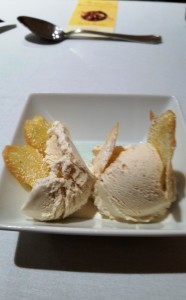
Literary Lunch – Draeger’s Market and Cooking School

March 5, 2016– Literary Lunch:  A new and exciting addition to my book tour

Draeger’s Market – Cooking School – San Mateo, CA

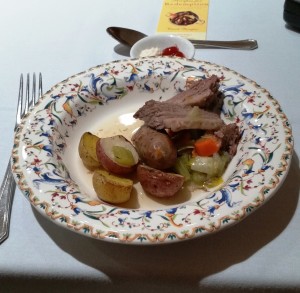
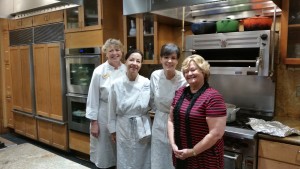
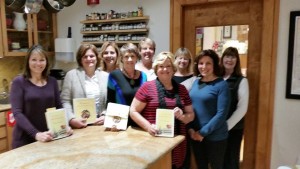
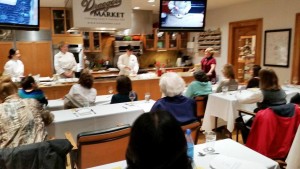
Who would have guessed that a book tour could lead to not only a sumptuous feast prepared by professional chefs, but to also have these recipes come straight from my own cookbook!  What a fun event!


Lemon Biscuits Pot au Feu - Draegers ClassChefsBookClubDraeger's Cooking School - Literary Lunch


All I had to do was show up, read from my companion cookbook, Recipes for Redemption, and share the stories about the cooks found in the novel, A Cup of Redemption.  Oh, and enjoy the succulent lunch! Snap Herplex Hub

Salete Refugiate – Excerpt from A Cup of Redemption

Springtime – 1943 – France

After fleeing the nightly barrage of Allied bombers over Paris, Marcelle arrived in Evaux les Bains, in the heart of the Auvergne Region. She stepped off the train with her baby, Gerard, and luggage in tow. Hoping to put the terror of living in Occupied France behind her, they had endured a harrowing day-and-a-half train ride, only to have the train strafed time and again by the Allies. Finally, their fear and torment was behind them. They were now safe.

She shook the coal dust from her clothes, from her infant, stamped her feet of soot and brushed a lengthy shank of her dark hair behind her ear. She needed directions to the village of Mainsat where her 8-year-old son, Thierry, awaited her arrival. He, too, had fled Paris seven months earlier, along with the remaining Parisian children.

She stepped up to a cluster of local peasants, who reminded her of her beloved Bretons. The women wore regional dress—black, full-length dresses with white aprons and round, white lace coifs pinned on their heads, while the men wore dark blue denim smocks over black work pants. Seeing the Auvernais for the first time, Marcelle breathed a sigh of relief for she felt as if she was back home in Brittany. But, once she began to ask for directions and heard their reply, she realized the regional dialect was not one she understood. It took a few minutes for her to understand their response. During that interim, her presence was met with more than a distant and cool demeanor . . . in fact, one of great antipathy.

Hoping she had understood the directions correctly, she thanked them, shifted her baby up in her arms, grabbed her belongings with the other hand, and began to head out of town. After only a few meters away, she heard what sounded like a cat-call. She turned back, just as the words, ‘saleté refugiate,’ were hurled her way.   Not understanding the words, she knew by the tone and the curl of their lips that she was not accepted. Even the thought of the words struck at her heart. As she walked further down the dusty road, the meaning of the words came to her: ‘filthy refugee’. To have such foul words flung at her at a time when she already felt so abandoned and so alone, she almost dropped to her knees.

Although a very young woman now, Marcelle was born on the last day of WWI, never knew her own father and suffered the humiliation of illegitimacy. Now she tried to save her two—yes, two illegitimate children—from the degradation of the human spirit during wartime. It was difficult enough to be loathed by the Nazis. But, the almost crippling pain she felt from the collective fear and hatred from her own Frenchmen due to war was almost more than she could handle.

Instead, she put on a smile and trudged on. She had her beloved son awaiting her arrival. And, she understood the fear. She had felt it in Paris. It was the reason she had fled. Everyone had become a possible enemy; anyone could be a collaborationist. Yes, in trying to save her little family, she had become a ‘saleté refugiate’ and she would have to rise above it.

Excerpt from my historical novel, A Cup of Redemption


Snap Herplex Hub

The Forgotten D-Day, but Not Forgotten Veterans

Four remaining WWII veterans of the U.S. Army’s 3rd Infantry Division (Rock of the Marne) are sleeping in their own beds tonight, their whirlwind tour du France of the 70th Anniversary of the Southern D-Day a year ago last August–now a dim but savored memory.  But, as this Veteran’s Day approaches, what will these men dare to dream?  Will these Octogenarians and Septuagenarians dream of the few brief days they were celebrated as heroes?  Certainly, their friends and family members, who didn’t accompany them, will never understand.  The U.S. nation as a whole rarely grasps their valiant participation in yet another D-Day. And will time separate them from the richness of French gratitude extended to them during this eleven-day tour?  If our veterans could hold on to only a few of the words delivered by French dignitaries and the hundreds of men, women and children who came forth in the sweltering heat to honor them that August summer, then maybe their dreams each night will be a little sweeter.

The 70th Anniversary of the Southern Landing (the 2nd D-Day) on the Côte d’Azur in France began for our men on August 15th –the actual 70th Anniversary of the landing on three of the beaches—Pampelonne near St. Tropez, La Croix Valmer and Cavalaire-sur-Mer—where the historic landings took place.  Our men, in spite of being crippled by old age, stood tall and participated in seven commemorative events—just that day.  These included placing wreaths at the memorials of our fallen soldiers, participating in parades, and being honored and celebrated with receptions, speeches, dinners, and an extraordinary fireworks display that evening in Cavalaire-sur-Mer.

The following days found our veterans continuing their tour north—north along their original trek of liberation—stopping at one village after another (twenty-five in all) along the Rhone River, through the French Alps, the Vosges Mountains, and at the infamous Colmar Pocket where so many of our men lost their lives.  (Our John Shirley, from Livermore, CA. was captured, escaped and was shot near this location in Bennwihr.)  The tour ended in a regal reception given for them in an elegant Hotel de Ville in Chateau Thierry outside of Paris.  Throughout the tour, the pomp of full military accord with color guards, military bands, veterans of the 1st French Army, the French Air Force and members of the French parliament to wizened Partisans and former F.F.I. members met these ‘reluctant heroes’ and help to make certain they received their just due.  Through parades, festivals, commemorative ceremonies, receptions, and luncheons, speeches from mayors, vice mayors, and Counselor Generals, the messages could be heard.  But, it was also from the hundreds of villagers who lent their cheers and their tears to the soldiers who freed them.  Literally thousands of people gave of their time and talents to making this 70th Anniversary tour one of their best.

The veterans themselves stood tall and accepted their praise, but still after all of these years, their quiet response was:  “We were just doing our duty.”   Especially while standing before the sea of white crosses (including Stars of David) stretched across the fields of Draguignon, Épinal and the American Lorraine cemeteries, their voices remained silent; their tears gave way to their heart-felt grief and sadness.  Comrades lost; dreams unrealized.

But, it was probably the letters written for the veterans and read by the children of Saulx de Vesoul and Bennwihr, which touched the men most deeply:  “We will never forget,” they read as their small, clear voices reached forth, rising above the church bells which began to ring.  “We will never forget how you brought liberty to our beautiful country.”  “We will never forget that you saved us from the grip of German tyranny and freed us.”  “Because of your sacrifice, peace is now our second religion.”  “Thank you for the sacrifice of your lives.”  Throughout the readings, the church bells continued to chime, ringing the bells of Freedom and Thanksgiving.

Yes, that was the echoing refrain:  “We will continue the memory of your deeds with our children and our children’s children,” the French told our men.  “We will remind them of the sacrifices you made for us,” the mayors of each city invoked.  “We will tell them about how you, not much older than children yourselves, came to a foreign land to save us from tyranny.  No, we will never forget!”

Sleep well our ‘reluctant heroes’, for you have made our world safer and there are those who will never forget your sacrifice.  Yes, the second D-Day for the U.S. may not be known, but in France you, as veterans and your deeds, will never be forgotten.

 Happy Veterans Day to our own beloved veterans!!

2014-08-15 10.39.01John Shirley, 2nd Lt., of Livermore, CA

Patrick Heagerty, Sgt., Manlius, NY

Gerald Papin, Sgt., Spring Hill, FL

Charles Condren, Pfc., Kerhonkson, NY


Snap Herplex Hub

CRÊPES de FROMENT

My newly published cookbook, Recipes for Redemption, serves up the wit and whimsy from the original text of the novel, A Cup of Redemption.  As an example or as a little ‘amuse bouche’, please find the following:

CRÊPES de FROMENT

BRITTANY – 2002 – ST. MALO –   ‘A crown of stone above the waves,’ wrote Gustave Flaubert of the magnificent walled city on the sea.

As the two women ventured farther into Brittany, rain fell gently upon them, off and on, light and misty at times, changing slightly with the wind.  The November air felt cool but not cold, so as they traveled around the fringes of Brittany’s coastline, they popped in and out of the car enjoying the seascapes.  It was early afternoon when they veered off the main road to stop in the walled city of St. Malo.  The tide was extremely low.  Old tugs and sailboats listed heavily to one side with their keels resting lazily in the mud.  The two climbed from the car to follow a path where locals walked along the sea wall with their dogs, stopped to chat with old friends, or disappeared through the city gates.  Before the majestic Solidor Tower within the city wall, others sat quietly on park benches to smoke or ponder the day.  Sea gulls and pelicans skulked about the edges of the water in search of lunch, as the smell of salt, sea and seaweed wafted up to the two as they sought out a creperie.   [A Cup of Redemption – Pg. 265-6]

**And as a special treat to you, my reader, I am including a part of a chapter which had been cut from the original novel, A Cup of Redemption, but tells more of the story of the women, politics and crêpes enjoyed in St. Malo.

“Hear that?” Kate asked.  “I believe that’s my stomach growling.”  Sophie, the quintessential tour guide, rose to the challenge.  Kate’s appetite was one she herself did not have, but could certainly accommodate.  She quickly moved back into her mode of ‘taking charge’ and off they went.  Vite!  Vite! Off to a number of little cafés which paralleled the water.

Unfortunately for them, it was nearing 2 p.m. and the cafés were preparing to close for the afternoon.  Not to be daunted, Sophie asked for suggestions, and they were directed up the street to a little crêperie.  As the door swung open and they entered the tiny shop, they were hit with the sweet smell of sizzling crêpes.  The banter inside, between the owner and his patrons, was also rich—rich with talk of the national primaries which had taken place earlier that week.

“What are they saying?” Kate asked Sophie, as they slid into a booth near the bar.

“The owner of the crêperie is saying, after eighteen years of flipping crêpes, mind you, he has made the decision this very week to sell his business and is also thinking of leaving the country as well.  It appears Brittany is not far enough away from the fray of presidential politics!” Sophie said with a toss of her head and a hearty laugh.

“Nothing good could possibly come from either Presidential hopeful,” the owner intoned.  “But we will know shortly, as the run-off is due in another week.”  He prepared crêpes at a fast clip as he bemoaned the thought of having to sell! “But, then, what is a Frenchman to do?  Enough is enough!” he wailed.

“I’ve never had a crêpe made in Brittany, the crêpe capital of the world,” Kate whispered.  She ordered two—they’re small, she thought—a savory one with a bit of ham and cheese, and a sweet crêpe made with a red berry confit with butter drizzled throughout and sprinkled with powdered sugar.  Sophie opted for a savory crêpe, as well.  But only one!  The crêpes were served hot, steaming actually, and the brown lacy pancakes literally melted into their mouths.

“Did I even chew?” Kate asked out loud.  “A quick cup of coffee is definitely needed now,” she said.  But, while Kate had been totally engaged in eating, Sophie, like the Frenchwoman she is, was more interested in debating the issues of the contentious upcoming run-offs.  Her laughter rang through the small café, and others joined in with her.  She turned to Kate and said, “Just like I told you!  People everywhere are planning to go to the polls with clothes pins on their noses—just to show their distain!!”  She laughed again.  They all laughed again, and their voices remained raised.  “These people still live in France,” Sophie said, in way of explanation.

As the two slipped out the door, Sophie said yet again, “Those are Frenchmen for you; they never miss a chance to debate politics!  I love that about my countrymen.”  [Recipes for Redemption – pg. 76-77] Snap Herplex Hub

A SNIPPET OF FOOD & TRAVEL ADVICE

TIP:  While visiting abroad, if you are searching for a sure-fire recipe to open up a topic of culinary conversation, simply ask your host to tell you about his or her favorite foods as a child.

This was advice I was given about fifteen years ago. Shortly thereafter, I began to put this tip into practice. It was like magic!  This should be easy, I thought. Everyone has a favorite food or a favorite story to share. But early on, I realized the necessity of preparing myself for this ‘event’, for an event it often became.

First, I settled into a comfortable chair and accepted the almost-always proffered glass of wine. I would take a sip and then breathe deeply, for I knew with almost giddy delight that once I asked the recipe question I would be in for a most passionate journey.

Immediately, I would notice eyes taking on a faraway look, and even before speaking, a smile would envelop her face. Within seconds, the fondest of memories would rise to the surface—moments of delight of holidays past . . . favorite family foods…cherished traditions…beloved family stories! Before I could even take another sip, my host would leap out of her seat, eyes now bright with excitement as she rushed off to the kitchen. “Here it is!” she’d exclaim as she clamored back to my side. And, she was right. There it was! Still clutched tightly in her hands—all smudged with past effort and spattered with conviction—was proof of a specialty worthy of sharing: her favorite recipe card.

Immediately, her arms would begin flailing, as mixing motions would sweep the air. Within moments, a family treasure would be rattled off and, fortunately, I was prepared. I had put my wine glass down, taken up my note pad, and proceeded to capture her piece of cherished culinary history.

Ah, but every once in a while this process took a different turn. Like peeling the leaves from an artichoke, I found the heart of the matter was sometimes still nestled deeply inside. Maybe it was my abiding interest in food and family, but I was most privileged to hear some of the most intimate stories of generations past recounted.

Last October, having been given permission to bring some of these stories to light, I published my debut novel, A Cup of Redemption, based on some of the stories, recipes and musings of one elderly Frenchwoman, Marcelle Zabel. Now, less than a year later, on August 15, 2015, my second book, Recipes for Redemption: A Companion Cookbook to A Cup of Redemption, will be published. You will find it is filled with the promised recipes from the novel, along with tidbits and banter shared not only by Marcelle, but also her daughter, Sophie and friend, Kate. Yes, they are all back and anxious to have you join them in a rollicking good time as they traverse the French countryside sampling regional foods once again and gathering even more recipes. Share in their fun! Snap Herplex Hub

Grandma Neustrom’s Swedish Rye Bread

Riffling through the dog-eared recipes from my past, I ran across one of my family favorites: my grandmother’s Swedish rye bread recipe. For me, the very words conjured up memories of early childhood redolent with the aromas of baking bread filled with the goodness of dark molasses and the tantalizing smells from my tiny cup of coffee. You see, following World War II, my father was released from the Army and he moved our then-small family—that was my mother, older sister, Melody, and a six-week-old me—from a Texas Army base back to my father’s hometown in Nebraska. Until he could get on his feet financially, we lived in the basement apartment of my Swedish grandparent’s home for my first six years of life.

Morning after morning, I remember hearing my Grandmother shuffle across the kitchen floor above our apartment, singing a happy little tune, as she busily prepared and baked her ‘famous’ bread. I would whine to encourage my mother to dress me more quickly as I would impatiently wait to hear my Grandmother’s call, “Yoo-hoo, Yoo–hoo, my Carole. Are you awake down there?” Quickly, I would trundle to the staircase and climb those twelve red linoleum steps to the first floor to be swept up into her full-bosomed embrace. She would kiss me from head to toe with wet, sticky kisses, then pass me over to my grandfather, who would place me on a stack of books (no thick phone books, though, as the town was much too small) onto a kitchen chair. And there at the table awaiting my arrival was one tiny cup filled with tantalizing Swedish coffee (no milk or cream added—no, no) and a thick slab of hot-from-the-oven Swedish rye bread, already oozing with a pat of butter and pooling into my own special plate. Picking up the slice with my chubby fingers, I would bite into that rich dark bread and butter would leak out of the corners of my mouth and drip down my chin. Then, my Grandma’s high pitched giggle would erupt and my Grandpa would smile from ear to ear, as his glasses slipped down his bulbous nose. Coffee and Swedish rye bread! Ah! I can’t think of a better way to start a day! This experience of sharing good food, along with rich coffee, and the warmth of a grandparents’ love led me to equate the importance of bringing families and friends together at the table. This also culminated in my writing an historical novel, A Cup of Redemption, which is the story of women building a friendship by sharing food, recipes and family stories. [Novel published October, 2014]

My new book, of which I’m most excited about, is Recipes for Redemption: A Companion Cookbook for A Cup of Redemption. It will provide the promised recipes—all traditional French—which were culled from the pages, the times, and the regional influences found in the historical novel A Cup of Redemption. Told through the voices of the three main characters—Marcelle, Sophie and Kate—the recipes shared are the very ones these women learned at the knees of their mothers and grandmothers. Whether “cuisine pauvre” (or peasant cooking), “war food” from WWII, or simply a family favorite, each recipe is carefully described and footnoted with interesting, often amusing culinary notes. Flavored with witty repartee and slathered with common sense, this cookbook is filled with heart, soul, humor, and delectable delight. I’m certain you will love it! Snap Herplex Hub

Call it ‘Cuisine Pauvre’

As my fingers poise over the key board, my heart leaps forward with anticipation. I’m about to begin writing. I love it! I love it, like I love when I’m poised in the kitchen ready to prepare a new recipe. Another creative attempt at either delighting my family or sending them into a nighttime of dreams in Technicolor. (That can happen.) But, it’s that anticipation of stumbling onto something new that excites me. I guess that’s how I began to write in the first place:

Excerpt from Chapter Two – Floating Island – A Cup of Redemption

Before Kate’s first dinner with Sophie neared an end, the cheese board was passed, accompanied with a basket of baguette slices. Sophie’s mother, Marcelle, leaned close to Kate and asked, “You are interested in learning our cuisine, n’est ce pas?” Marcelle peered over the top of her wine glass as she spoke.

“Yes, Madame, I would love to learn what makes your French cuisine world-famous; your haute-cuisine,” Kate said.

“Our haute-cuisine?” Marcelle bit into her cheese and bread. A twinkle flitted through her dark eyes.

“Yes, but more than ‘haute-cuisine’ I would prefer learning the fine art of traditional French cooking.”

“Well, Madame, our traditional cooking is rarely considered fine, but we certainly keep a respectable ‘cuisine pauvre.’”

Kate was brought up short with this term and her face turned quizzically toward Sophie.

“Kate, ‘cuisine pauvre’ means ‘poor kitchen’ and refers to the traditional-type of peasant cooking. These are the recipes that have been handed down through the many, many generations and this is the type of cooking Maman taught me. As a matter of fact, we continue to use her recipes every day. Like this evening!” Sophie popped up from the table, disappeared into the kitchen, and then reappeared at the table.

“And for our finalé,” Sophie announced, “we have as the pièce de résistance, Maman’s ‘Floating Island’ dessert.” Sophie winked at her mother as everyone swooned. Kate’s eyes grew wide as what looked like a bowl of white cotton was placed before her. She picked up her spoon and with the first bite, discovered the delicate sweet flavor of meringue and orange, which lifted off her spoon and onto her tongue like a soft cloud. De-lect-able!

Snap Herplex Hub

Excerpt from A Cup of Redemption – Chapter Two – Floating Island

“I’m curious, Madame,” Kate said as she picked up her fork. “What foods did you prepare as a young wife in France? Did you prepare the Floating Island back then?”

“What foods did I prepare? In France?” Marcelle echoed the question. She threw her head back and laughed, her deeply resonant voice filling the room. But, then she sat back in her chair, as her eyes lighted on the birds fluttering outside the sliding glass door.   Kate was surprised at her laughter, but followed her gaze to see what had caught her attention. The California hills, just beyond her backyard, were vibrant green from recent winter rains, and the birds were having a heyday. She imagined Marcelle’s mind fluttering too, back through the cobwebs of her past. Through the glass table top Marcelle’s shoeless feet swung under the chair, back and forth, to and fro. Marcelle stretched her back, picked up her fork and sampled the lemon tart.

“Mmm, trés bon, Madame.” She swallowed. “Maybe I should get your recipe.” She paused. “Well, to answer your question,” she began, her rich voice rising, “I never had to diet.” She tossed her head back and laughed again as she licked lemon curd off her lips. She pulled her large brown sweater about herself, as Sophie tittered at the old family joke. Clearly Marcelle Zabél had stories to tell.

“It was during World War II, you see,” Marcelle began again, “and we had to forage in the fields for every potato, every carrot, even for an onion or two. We had a chicken once in a while, or a bit of rabbit. You know, some of the foods I learned to cook back in ‘43, I still prepare today, like Paté de Pomme de Terre. You wanted recipes, oui? I’ll be sure to give you that one.”

Kate nodded. “I would love that.”

“Potatoes and cabbages were our mainstays, of course, but we were lucky to have anything at all,” Marcelle continued. “Sometimes, when the Germans confiscated our food, we were forced to sneak into the night in search of even one potato. It was perilous, mind you. We hoped no land mines had been laid during the day and that no German caught us outdoors after curfew.

Kate had not been prepared for this turn in the conversation and looked for help from Sophie, who merely shrugged and waved a limp hand into the air. “C’est la guerre, as they say,” she laughed. “And, it is Maman’s story.” She patted her mother’s hand once again, reassuring her, or perhaps, herself.

Snap Herplex Hub

Savoring the Olde Ways gives way to A Cup of Redemption – blog hop

I was invited by Darlene Frank, a fellow member of the California Writers Club, to join her ‘blog hop’.  It seemed like a fun thing to do, so I agreed.  She also invited my daughter, Adaire Salome-Keating, to join her as well.  So, this ‘blog hop’ is our first mother-daughter event.

Darlene requested that we answer four questions about our own writing, so this is my response:

What am I working on/writing?

In 2000, I had the extraordinary good fortune of being befriended by a well-known and accomplished chef and culinary teacher, Sharon Shipley of Sunnyvale, California.  (Sadly, she has since passed away.)  I traveled with her throughout France and Italy in her search for traditional recipes, (known as cucina povera in Italian and cuisine pauvre in French) and to help her set up traditional cooking tours.  Sharon was laser-focused on the foods and their preparation but I was drawn to and fascinated by the intrinsic bond woven by families who shared their daily meal.

As a retired family therapist, I continue to hold an interest in family dynamics and am especially curious about the ‘glue’ that holds European families together.  Is it their religion?  Is it their traditions?  Could it be their culture?  To curb my curiosity, I decided to interview the families we met.  And, because most families come together at the family table, I began to ask people simple questions like, ‘What kinds of foods did you enjoy as a child?’, ‘What were your favorite holidays and traditions?’ and ‘What is the family recipe you continue to prepare?’  That line of questioning led to over seventy interviews in France and over thirty-five interviews in Italy along with receiving a plethora of ‘favorite family recipes’ they were willing to part with.  In fact, I received the honor of having many of these recipes prepared for me in their kitchens, at their tables, along with their favorite wines and delightful stories.  This became the basis for my travel/food tales I call Savoring the Olde Ways.

Then, a funny thing happened!  During one of my interviews with an elderly French woman, I was brought up short.  Instead of a simple recipe, she slowly began to reveal her life story—along with a secret past, which included not just stories of WWI, but also WWII.  Unfortunately, within a few months, she passed away, but with the help of her daughter, I continued to research her story, her letters, journals and we traveled extensively throughout France together. What I discovered about her life—which was one filled with selfless courage, love, and honor of family, was that her greatest desire was to find out her own identity.  My novel, A Cup of Redemption, which is based on her life, is being published this Fall by She Writes Press—on October 27th, to be exact.

So, after a short twelve-year hiatus, I now feel content to be able to settle back once again among the discarded chapters, recipes and kitchen interviews from years ago.

How does my writing/work differ from others in its genre?

My writing is driven by the interviews and the interviewees—their interests, their favorite traditions, their cultural norms and their family stories.  Because many of the stories also included the impact of war—no matter the generation—the conversations easily glided into the ‘why’ of certain shared traditions and recipes born out of poverty or sacrifice during war.  The importance of ‘family’ was very pronounced, especially when the family had suffered so much loss.  So, I write about the human experience along with the passion for food and the sharing of recipes—which tends to nurture each and every one.

Why do I write what I do?

I’m driven by my desire to understand the women and families who, in spite of suffering so much, have given their families reasons to stand up, be courageous, laugh and rejoice.  Enjoy life, because you never know what the future holds!

How does my writing process work?

I pack my car with my favorite beach chair, notes, pen and paper, sunscreen, cheese sticks, bottled water and head to ‘my’ beach.  There, I let my mind wander back and forth from the surf, to the children laughing delightedly as the cold water engulfs their toes, to the birds skittering along the lacy fringes of the waves, to opening myself up to all the gifts I was given years ago—through those precious conversations over the kitchen tables in France and Italy.  You see, I enjoy a sweet life!

Whose next on this blog hop?

As it turns out, I’m not so adept in getting my ‘ducks in a row’, but the two women authors I would like to introduce are:  Elise Frances Miller, author of A Time to Cast Away Stones and Bernadette “Bette” Houchens, who is a new voice and in the process of completing her first memoir.  Both are member of our California Writers Club in Belmont, California!  They will be coming up on this roster the week of July 21st.   At that time I will introduce them and give you their bios and details.  But, right now they both are either on vacation or have just returned.  (Tis the season!)  Stay tuned.

You are welcome to comment below.  And be certain to check out Darlene Frank’s blog post (http://www.darlenefrankwriting.com/ ) along with Adaire Salomé-Keating’s post (http://adventuresofaddgirl.com/)

Snap Herplex Hub

« Older posts Newer posts »

© 2026 Carole Bumpus

Theme by Anders NorenUp ↑